

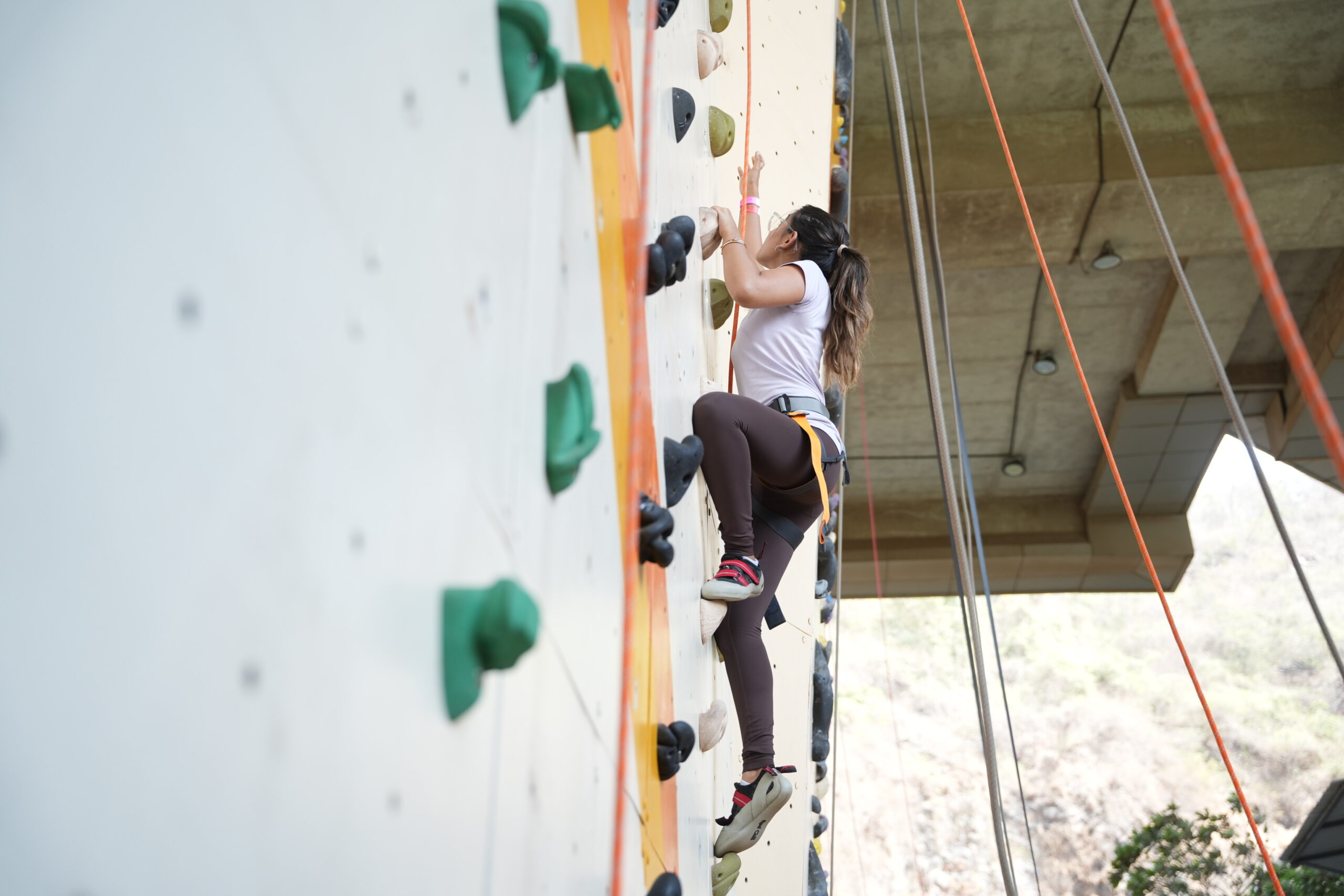
The Psychology Behind Climbing Motivation
You almost finish the route.
You miss one hold.
You fall.
And almost immediately, you think:
“One more try.”
Climbing has a unique ability to keep people engaged because it creates a constant cycle of challenge, adjustment, and progress.
The reward isn’t just reaching the top – it’s feeling yourself get slightly better each attempt.
Why Small Wins Feel So Rewarding
Climbing gives immediate feedback.
You either reach the next hold or you don’t. But even unsuccessful attempts often feel productive because small improvements are easy to notice.
Maybe this time:
- You reached one move further
- Your balance improved
- You solved part of the route
- You understood what went wrong
These tiny moments of progress create a strong sense of momentum.
Unlike long-term fitness goals that can feel abstract, climbing makes improvement visible in real time.
The Problem-Solving Aspect Keeps the Brain Engaged
Climbing isn’t repetitive in the same way many workouts are.
Every route presents a slightly different challenge:
- Different movements
- Different balance points
- Different strategies
That problem-solving aspect keeps people mentally engaged throughout the session.
Instead of simply repeating movement, climbers constantly experiment:
- “What if I shift my weight differently?”
- “What if I use another foothold?”
- “What if I slow down here?”
That curiosity is part of what makes climbing so satisfying.
Why Progress Feels So Motivating
Climbing creates a healthy relationship with failure.
Falling isn’t seen as losing – it’s part of the process.
Because progress happens through repeated attempts:
- Setbacks feel temporary
- Success feels earned
- Improvement becomes measurable
People often become motivated not by perfection, but by seeing themselves improve gradually over time.
That’s what creates the urge to return and try again.
Why Community Reinforces the Habit
The social environment around climbing strengthens motivation even further.
Watching others improve makes progress feel achievable.
Encouragement during difficult attempts keeps people engaged.
Shared retries make failure feel lighter.
Over time, climbing becomes associated not only with achievement, but with routine, familiarity, and community.
At High Rock in Powai, many people return for reasons beyond fitness.
They come back for:
- The satisfaction of progress
- The mental reset
- Familiar faces
- Consistency in their routine
- The feeling of getting slightly better every session
That combination of challenge and community is what keeps climbing rewarding long-term.
Sometimes all it takes is one more try.
Visit High Rock, Powai.
Leave a Reply