

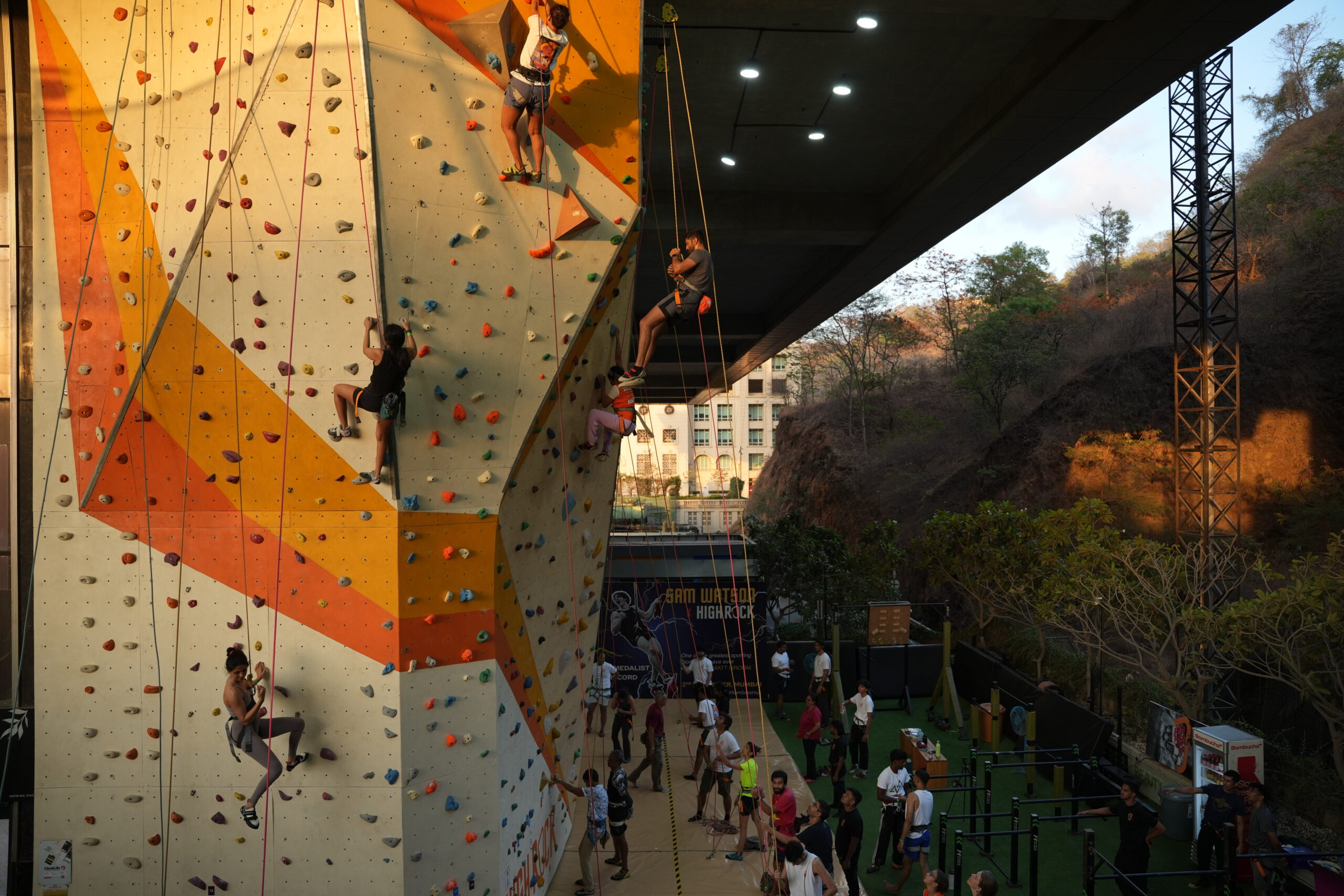
Why Climbing Gyms Are Becoming the New “Third Space”
For years, cafés, parks, and local hangout spots acted as “third spaces” – places people could spend time outside home and work. But today, many people are looking for something more active, engaging, and community-driven.
In cities like Mumbai, where routines can quickly become repetitive, climbing gyms are quietly becoming a new kind of third space. Not just because people want to work out, but because they want spaces where connection happens naturally.
Unlike traditional gyms where everyone keeps to themselves, climbing creates interaction without forcing it. You might arrive alone, but it rarely feels isolating for long.
What Makes a Space a “Third Space”?
A third space isn’t necessarily about the activity itself. It’s about how that space makes people feel over time.
Usually, these spaces share a few qualities:
- They’re easy to visit regularly
- They don’t require formal socializing
- Familiar faces become part of the routine
- People feel comfortable spending time there without pressure
Today, people increasingly want environments that combine movement, social interaction, and routine – especially in urban spaces where genuine connection can feel harder to find.
That’s where climbing gyms naturally fit in.
Why Climbing Naturally Creates Community
Climbing has a very different social rhythm compared to most fitness environments.
People climb for short bursts and rest in between attempts. Those pauses create room for conversation without forcing it. Someone might ask about a route, offer encouragement, or celebrate a successful climb with you – even if you’ve never met before.
There’s also something uniquely human about struggling openly in climbing.
Everyone falls.
Everyone retries.
Everyone gets stuck at some point.
That shared vulnerability removes a lot of social pressure. Unlike spaces where people feel the need to appear experienced or polished, climbing normalizes effort and imperfection.
Even watching someone attempt a difficult route creates a sense of collective participation. People naturally cheer each other on because everyone understands the challenge.
Over time, these repeated interactions build familiarity – which is often how real communities begin.
How High Rock Fits Into This
At High Rock in Powai, climbing is only part of the experience.
The space is designed to feel approachable for first-timers while still giving regular climbers enough challenge to keep returning. Sessions are self-paced, people climb at different levels together, and interaction happens organically.
Some people come for fitness.
Some come to learn something new.
Others simply enjoy having a place they look forward to returning to after work.
Over time, the atmosphere becomes part of the routine – familiar faces, shared attempts, and conversations that happen naturally around climbing.
Looking for a space you’ll actually want to keep coming back to?
Visit High Rock in Powai and experience climbing beyond just fitness.
Leave a Reply