

How Shared Challenges Help People Connect Faster
Most conversations feel less awkward when people are focused on something together.
That’s why shared challenges often create stronger connections than traditional social settings. Instead of forcing interaction, the activity itself becomes the bridge.
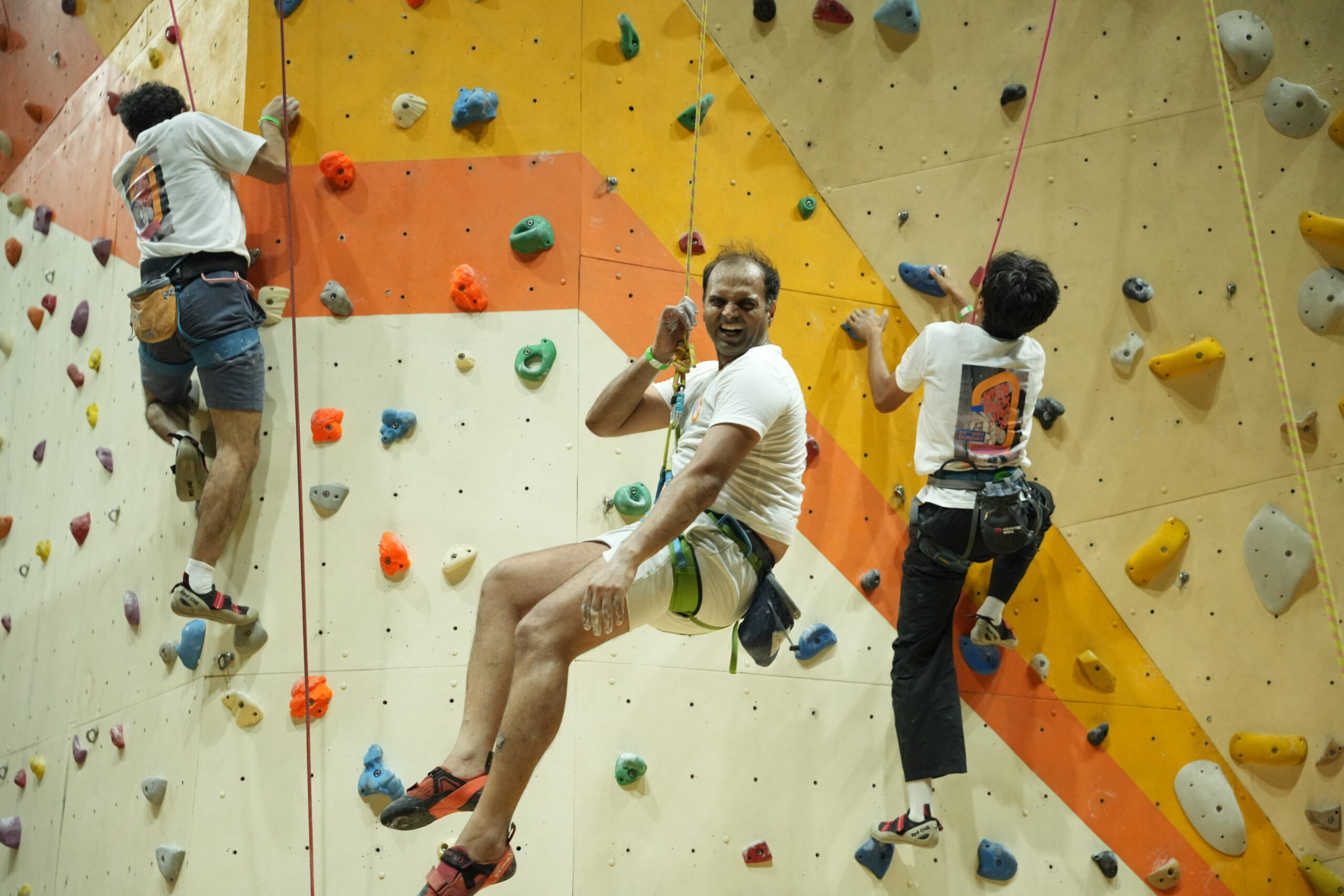
Climbing naturally creates these moments – whether it’s friends attempting a route together, coworkers encouraging each other during a team outing, or strangers celebrating small wins side by side.
Why Shared Challenges Build Connection
People tend to connect faster when they experience uncertainty, effort, and progress together.
Climbing creates this naturally because every route involves problem-solving, small failures, retries, and eventual breakthroughs.
When someone struggles on a climb:
- Encouragement becomes genuine
- Advice feels collaborative
- Celebrating progress feels automatic
Even simple moments – like finally reaching a hold after multiple attempts – create shared emotional experiences.
Psychologically, these situations reduce social barriers because everyone becomes focused on the same challenge instead of how they appear socially.
That shift makes interaction feel easier and more authentic.
Why Climbing Feels Different From Traditional Team Building Activities
Many team activities involve passive participation. A few people dominate while others observe.
Climbing works differently. Everyone participates in their own way:
- Everyone faces challenges
- Everyone progresses differently
- Everyone experiences visible improvement
There’s no “perfect” climber in the room because every route demands something different.
Someone who excels at one climb may struggle on another. That balance creates an environment where people support each other instead of competing constantly.
It also makes the experience feel more collaborative than performative.
Small Moments That Create Real Connection
What makes climbing social isn’t necessarily big conversations. Often, small interactions repeated consistently build the community connections
Examples include:
- Someone helping you figure out foot placement
- A group cheering after a successful attempt
- Laughing after multiple failed tries
- Retrying a route together
- Watching someone finally complete a climb they’ve been working on
These moments feel natural because they happen around a shared experience instead of forced networking or structured icebreakers.
Over time, those small interactions build familiarity and comfort surprisingly quickly.
Why This Matters Beyond Fitness
Connection is one of the biggest reasons people continue activities long-term.
Climbing environments often lead to:
- Stronger friendships
- Better workplace bonding
- More consistent routines
- Increased confidence in social situations
For many people, the appeal goes beyond fitness entirely. The activity simply creates an easier way to meet people and feel part of something.
That’s especially valuable in cities where social interaction often becomes limited to work or planned outings.
Climbing Together at High Rock
At High Rock in Powai, climbing works well for:
- Friend groups
- Team outings
- Beginners trying something new together
- Solo visitors looking for community
Because climbing sessions are naturally interactive, people don’t need prior experience to enjoy the social side of it.
The shared challenge does most of the work.
Come climb together at High Rock, Powai.
Leave a Reply