

Climbing for Everyone: How High Rock Is Making Indoor Climbing More Accessible
Climbing can look like a sport reserved for people who are already strong, sporty or experienced. At High Rock, we’ve been interested in asking a different question: how can more people get the chance to try it?
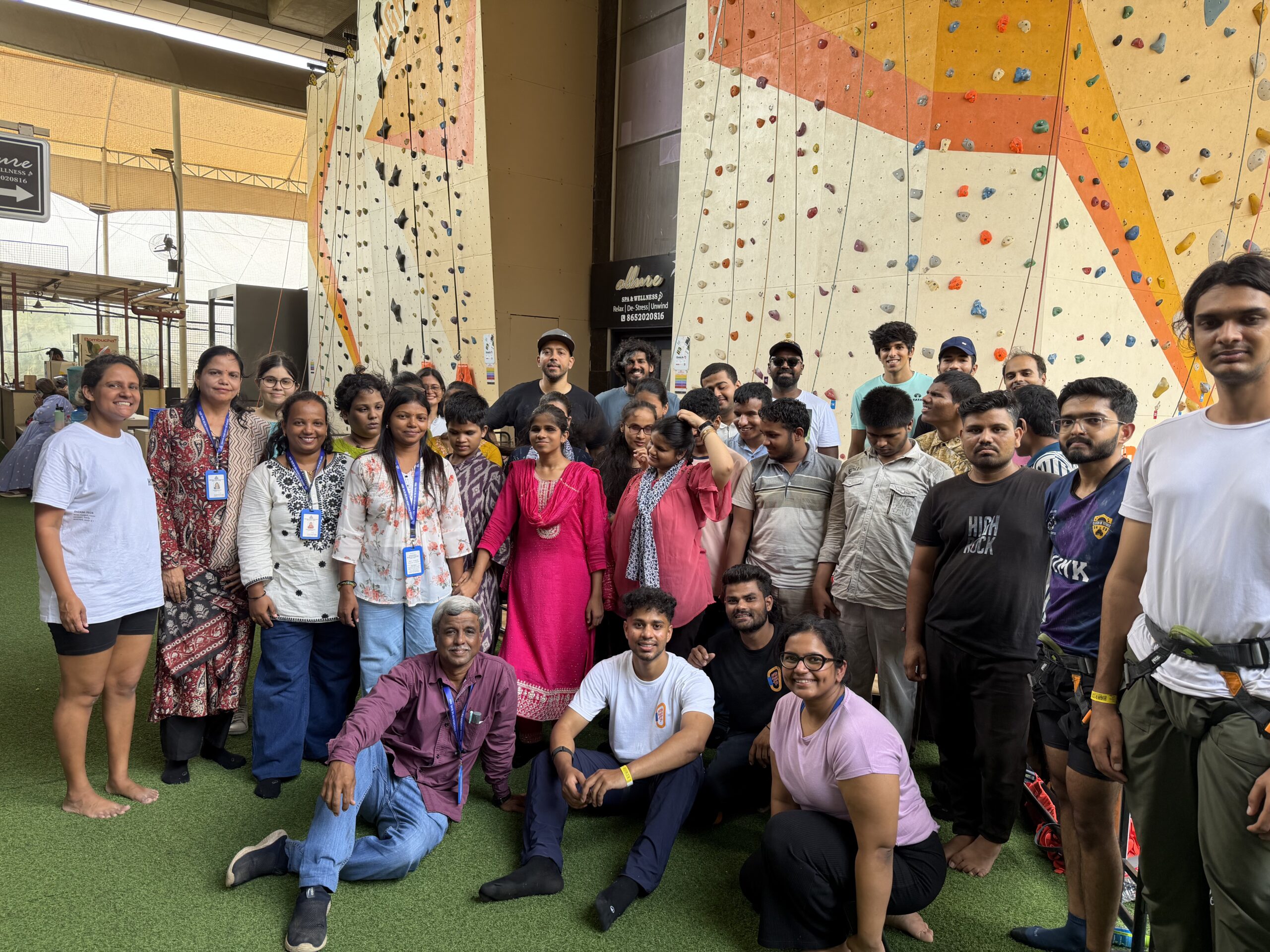
We’ve had the opportunity to introduce climbing to communities that may not otherwise have access to the sport. We hosted children from a Bal Mandir government school and partnered with the National Association for the Blind to explore how indoor climbing can be made more accessible to people with visual impairments.
These experiences have reminded us that growing a climbing community isn’t only about getting experienced climbers onto the wall. It’s also about making room for people who are discovering the sport for the first time.
Giving Children a Chance to Try Something New
One of our community initiatives involved welcoming children from a Bal Mandir government school to High Rock for a climbing experience.
For many of them, indoor climbing was something completely new. The session was an opportunity to get familiar with the wall, learn about climbing and experience the feeling of getting off the ground and reaching a hold.
There was no expectation that they should already know how to climb. The focus was on giving them the chance to try something new in a supportive environment.
Why Experiences Like This Matter
Access to sport isn’t the same for everyone. Sometimes the biggest barrier is simply not having the opportunity to encounter a particular sport.
Bringing children into a climbing gym can make the sport feel real and possible. They get to experience it for themselves rather than only seeing it from the outside.
And sometimes, trying something once is enough to make you curious about what you could do next.
Climbing With the National Association for the Blind
We also partnered with the National Association for the Blind to explore an important question: can climbing be made accessible to people with visual impairments?
Climbing is often thought of as a highly visual sport because climbers use what they see to find holds and read routes. Working with NAB gave us an opportunity to think about how information, instructions and support could be adapted so that visual impairment doesn’t automatically mean being excluded from the experience.
Making the Wall Easier to Understand
For a visually impaired climber, information that a sighted climber can pick up immediately from looking at the wall may need to be communicated differently.
That can mean clearer verbal instructions, describing where holds are, communicating movement and position, and working closely with the person climbing to understand what kind of support they need.
The important part is not assuming that everyone needs the same thing. Accessibility starts with listening and adapting.
What We Learned
These experiences have changed the way we think about accessibility.
Sometimes making a sport more inclusive is not about changing the activity completely. It is about changing how we introduce it, how we communicate and how we support the person taking part.
It also means being open to learning. Working with communities directly tells us much more than making assumptions from the outside.
Building a Bigger Climbing Community
High Rock has always been a social space. People come in with friends, meet other climbers, help each other with routes and slowly become part of a community.
We want that community to be bigger and more varied.
That means continuing to create opportunities for people who haven’t traditionally had access to climbing, whether that’s children getting their first taste of the sport or people with disabilities finding a way to experience it.
Climbing Should Feel Like an Open Invitation
You don’t have to fit a particular profile to be a climber. You don’t have to be the strongest person in the room. And you don’t have to know what you’re doing before you start.
For some people, progress means climbing a harder grade. For someone else, it might simply mean getting onto the wall for the first time.
Both are worth celebrating.
What’s Next?
The Bal Mandir visit and our partnership with the National Association for the Blind are two experiences that have encouraged us to keep looking for ways to make climbing more accessible.
We hope to continue working with schools, organisations and different communities to introduce more people to the sport and make High Rock a space where more people feel welcome.
Because for us, growing climbing in Mumbai isn’t just about building better climbers. It’s about building a bigger community around the sport.
Leave a Reply